
Flannel Shirt Manufacturing in Turkey: How to Place Your Winter Order on Time
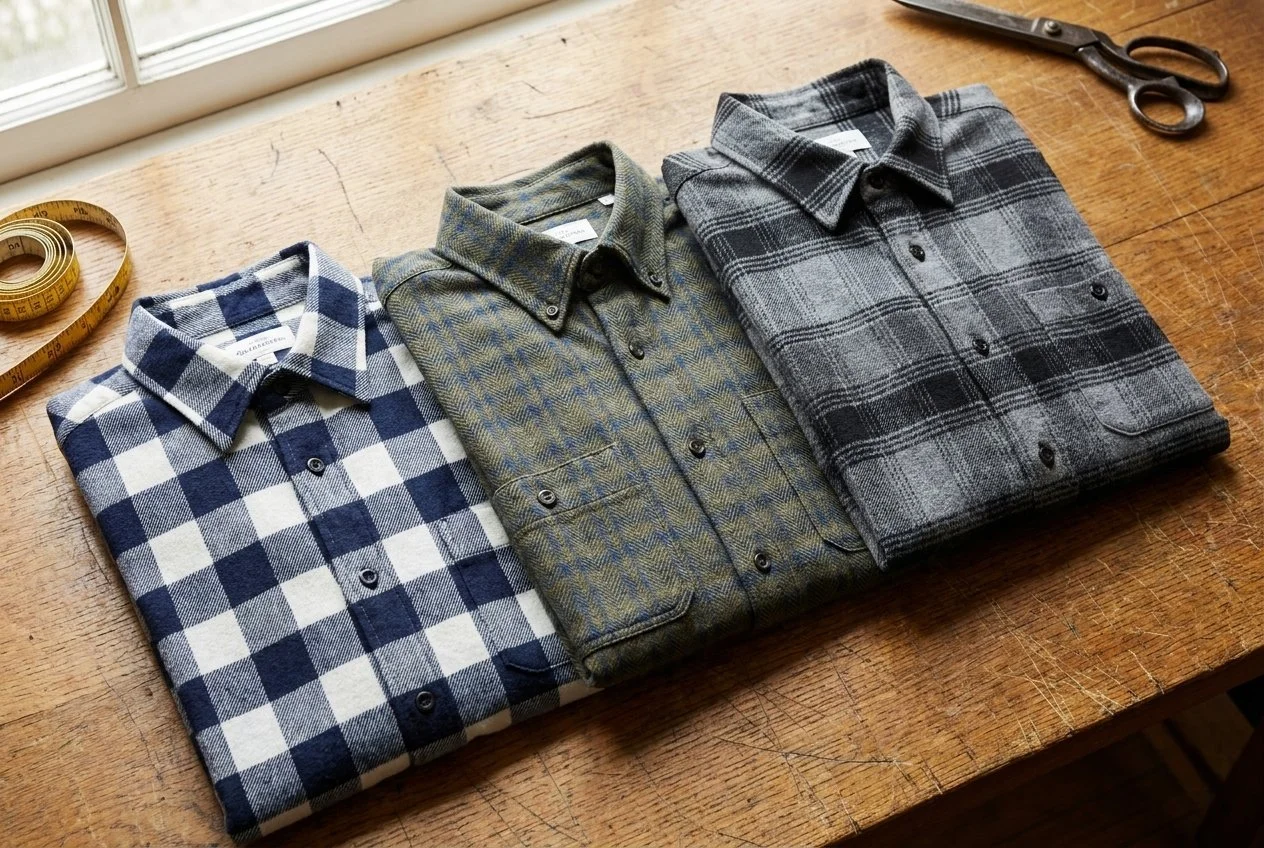
Flannel Shirts
Flannel is one of those fabrics that sells itself. The moment temperatures drop across Europe and North America, consumer demand for flannel shirts spikes reliably — and brands that have stock on shelf in September and October capture that demand. Brands that placed their orders late are still waiting for production.
That timing dynamic is the most important thing to understand about flannel shirt manufacturing. Everything else — fabric quality, construction standards, factory selection — matters, but none of it matters if your goods arrive in December for a market that peaked in October.
This guide covers what brands and buyers need to know when sourcing flannel shirts from Turkish manufacturers, with an emphasis on getting the calendar right.
What Flannel Actually Is
Flannel is a soft, medium-to-heavyweight woven fabric that's been brushed on one or both sides to raise the fibres and create a warm, slightly napped surface. Most shirt flannels are woven in a twill or plain weave base and then brushed after weaving — the brushing is what gives flannel its characteristic warmth and softness.
Common compositions for shirt flannel:
100% cotton — the standard. Warm, breathable, washes well, gets softer with use.
Cotton-wool blend — warmer and more luxurious, higher cost, more complex care requirements.
Cotton-polyester blend — lower cost, less breathable, more common in volume workwear applications.
For mid-to-premium shirt collections, 100% cotton flannel in the 160-200 gsm range is the right starting point. Lighter weights (130-150 gsm) produce a flannel that's appropriate for transitional weather but won't satisfy a customer looking for genuine warmth.
The Flannel Production Calendar
This is where most brands get into trouble.
Flannel is an autumn/winter fabric. Your customers want it in September and October. Work backwards from there:
In-store target: September
Ex-factory: late July / early August
Bulk production start: June
Sample approval: May
First sample: April
Order confirmed and tech pack submitted: March
That means if you're reading this in spring and haven't started the conversation with your manufacturer yet, you're already at the edge of your window. If it's summer, you need to move immediately.
Turkish flannel production doesn't have dramatically longer lead times than other shirt categories — bulk production runs 5-6 weeks for a standard flannel shirt programme. The issue is that flannel fabric, particularly in specific checks and colours, is often ordered by mills seasonally. If a colourway you want isn't in stock at the Turkish mill, it either needs to be imported or you need to choose from what's available. Both scenarios add time.
The brands that consistently hit their autumn windows are the ones who are talking to their manufacturers in February and March — not June.
Fabric and Pattern Considerations
Flannel shirts are almost always patterned — tartan, windowpane check, gingham, or multi-colour plaid. This has direct implications for production.
Pattern matching is the most labour-intensive aspect of flannel shirt production. At every major seam — side seams, sleeve attachment, collar join, pocket placement — the check or stripe pattern needs to align. A factory that doesn't prioritise pattern matching will produce flannel shirts that look fine on a hanger and wrong on a person. Specify pattern matching requirements explicitly in your tech pack and check every seam on your sample.
Colour consistency matters more with flannel than with solid fabrics. Flannel checks involve multiple yarn colours woven together — if the yarn dye lots aren't consistent, the check pattern shifts subtly between fabric lots. For repeat orders, always reference the original approved bulk swatch.
Fabric hand feel changes with washing. Flannel that feels slightly stiff off the loom softens significantly after the first wash. Decide whether you want to specify a pre-washed or enzyme-washed finish — a garment-washed flannel shirt has a broken-in softness from the first wear, which some markets prefer. Factor this into your sample approval — approve the fabric at the finish level you want in bulk.
Construction Details
Flannel shirts have some specific construction considerations worth addressing in your tech pack:
Seam finishing. Flannel frays more than poplin or Oxford. Overlock finishing on all interior seams is standard, but for premium applications, French seams or flat-felled seams add a quality signal and improve durability. Specify which you want.
Button choice. Horn or corozo buttons work better with flannel than plain polyester — they complement the natural, tactile quality of the fabric. Worth the marginal cost difference for mid-to-premium positioning.
Collar construction. Most flannel shirts use a standard point or button-down collar. The button-down works particularly well with flannel's casual character. Whatever you choose, ensure the collar interlining weight is appropriate for the fabric — flannel is heavier than poplin and a light interlining will produce a collar that lacks structure.
Chest pocket. A patch chest pocket with a matched check pattern is standard in flannel shirts and expected by most buyers. Specify pocket dimensions and pattern matching requirement.
Sourcing Flannel Fabric in Turkey
Turkish mills produce cotton flannel domestically, though the range of in-stock checks and colours is more limited than what's available from specialist European mills in Portugal or Italy. For brands with specific tartan or heritage check requirements, importing fabric from a European mill and cutting and making in Turkey is a legitimate approach — Turkey's CMT capability is strong regardless of where the fabric originates.
For brands working from standard checks — classic red/black buffalo check, navy windowpane, grey heather plaid — Turkish domestic flannel supply is generally adequate and keeps lead times shorter.
Discuss fabric availability early with your manufacturer. A good factory will be transparent about what's in stock, what needs to be ordered, and how that affects your timeline. If they're not raising this question, you should be.
Positioning and Market Fit
Flannel shirts perform strongly in UK, German, Scandinavian, and North American markets — anywhere with a genuine cold season and a consumer base that values casual-formal dressing in autumn and winter. They're also consistent performers in outdoor and lifestyle brand collections.
For B2B buyers — retailers, brand owners, private label operators — flannel is a reliable seasonal category precisely because demand is predictable. It's not trend-driven in the way some fashion categories are. A well-constructed flannel shirt in classic colours will sell every autumn without requiring a significant marketing push.
The risk is purely logistical: stock it late and you miss the window. Stock it on time and it moves.
Zusammenarbeit mit Sartello
Sartello produces flannel shirts as part of our autumn/winter seasonal programme for European and international brands. We work with domestic Turkish flannel suppliers for standard checks and can accommodate imported fabric programmes for brands with specific pattern requirements.
Our standard MOQ for flannel shirt production is 300 pieces per style per colour. For brands planning AW collections, we recommend initiating conversations by March to ensure production capacity and fabric availability are confirmed well ahead of the summer production window.
If you're planning a flannel programme and want to discuss fabric options and timelines, get in touch through our contact page. We respond within 2 business days.
